Introduction
A linear guide rail, also called a linear rail guide, is used to achieve smooth and precise linear motion. It's widely applied in CNC machines, automation systems, and industrial equipment. But how exactly does it work, and why is it so important in modern engineering? Let's take a closer look.
What is a Linear Guide and How Does It Work?

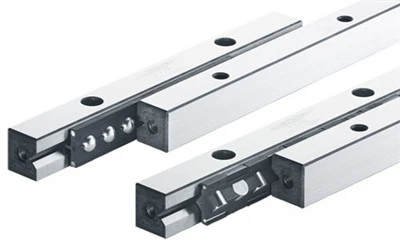
A linear guide is a mechanical component that usually consists of a fixed rail and a slide (also called a slider) that moves along the rail. The slide contains rolling elements such as ball bearings or rollers. As the slide moves along the rail, the rolling elements circulate inside the slider, reducing friction and ensuring smooth motion.
Major Types of Linear Guide Rails

Ball Linear Guide
Ball bearing linear guide operates by circulating balls between the slider and the guide rail. The balls roll along dedicated raceways and circulation paths, enabling continuous low-friction linear motion. They offer low friction and high precision, making them ideal for CNC machines and laboratory equipment.

Roller Linear Guide
Roller bearing linear guides use cylindrical rollers instead of balls, which have a larger contact area and can provide higher load capacity and rigidity. This type of guide is often used in heavy industrial equipment, automated stamping production lines, etc.
Structure of Linear Guide
A typical linear guide rail system consists of two main componentsand other accessories:
• Rail
The guide rail is a precision machined track typically made of carbon steel or stainless steel that is primarily responsible for guiding the slide along a straight path.
• Carriage (or Block)
The slider is installed on the guide rail and moves along the guide rail. It is the intermediary between the load and the guide rail system, containing multiple rolling elements (balls or rollers), circulation circuits, guide grooves and preload devices, and sometimes also includes lubrication oil circuits and dust seals.
• Other Accessories (Such as End Caps, Seals, Lubrication Systems)
They are used to assist the internal circulation of the slider, maintain lubrication, block dust, and extend service life.

Key Features and Benefits of Linear Guide Rail System
• High Precision and Repeatability
The contact surface between the rail and the slider of the linear guide is precision ground, and the manufacturing tolerance is very small (commonly within ±5μm). In addition, the ball running track inside the slider is stable, which can reduce the accumulation of displacement errors, ensuring consistent and accurate movement over a long period.
• Low Friction, Smooth Operation
Linear guides have built-in rolling elements such as balls or roller bearings, which circulate in the track to reduce the contact area and have a lower friction coefficient than traditional sliding guides.
• Heavy Load Capacity
The heavy-duty linear guides have been structurally strengthened and their material upgraded to withstand strong static and dynamic loads without deformation. Thus, they can support high-performance machines operating smoothly in harsh environments.
• Strong and Durable
Linear bearing rails are made of hardened steel or alloy materials, which are highly rigid and durable. They are heat-treated during the manufacturing process to improve hardness, wear resistance, and overall service life.
• Easy to Integrate
The compact and modular design of the linear guide system allows for easy integration into various mechanical structures, ranging from small medical devices to large industrial machinery.
Typical Applications of Linear Motion Guide
Linear guide rails are widely used in industries that require controlled, precise linear movement. They enhance machine performance by providing stability and reducing friction. Below are some of the common applications.
1. CNC Machinery
Linear guide systems offer low-friction, high-precision movement through rolling elements with micron-level accuracy. This makes them suitable for CNC machining processes like milling, turning, and engraving, where even the smallest deviation can result in scrap or rework.
2. Industrial Automation
In automated assembly lines and robotic arms, every pick, place, or inspection task must be performed quickly and precisely. Linear guide rail systems provide fast, repeatable motion for positioning, loading, and quality control, helping increase both efficiency and production throughput.
3. Robotics and Pick-and-Place Systems
Compact, lightweight linear guide rails and carriages provide smooth, accurate motion with minimal resistance. These features enable seamless integration into robotic platforms and pick-and-place systems.
4. Medical and Laboratory Equipment
Linear guides provide low-vibration motion with low rolling noise, making them suitable for equipment used in sensitive environments, such as medical imaging equipment, diagnostic instruments, and laboratory automation equipment, where the accuracy directly affects test results and operational safety.
5. Semiconductor and Electronics Manufacturing
Micron-level deviations are equally unacceptable in semiconductor manufacturing and electronic assembly, which can result in product defects or costly rework. Precision linear guides provide the ultra-stable, low-friction motion required for processes such as wafer handling, laser cutting, and PCB placement, ensuring accuracy and production efficiency.
Conclusion
Linear guide rails are fundamental components in modern engineering, enabling smooth, precise, and repeatable motion across a wide range of industrial applications. Whether you're building high-precision CNC machinery or automated production lines, a reliable linear rail and carriage system is essential for performance and longevity.
JSM: Professional Linear Guide Manufacturer
As a professional linear guide manufacturer, JSM provides quality products that meet global standards. With strong engineering design and reliable performance, our solutions are designed to move your machines and business forward.
Looking for reliable linear motion components? Contact us today to learn more about our linear guide solutions.
FAQ about Linear Guide
Q: What is the coefficient of friction of a linear guide?
A: The friction in a linear guide depends on many other factors besides the external load. The friction coefficient of lubricated linear guides is usually u=0.003~0.005.
Q: What is the maximum allowable operating temperature for linear guide rails?
A: Linear guide rails can generally operate continuously within a temperature range of -20°C to 80°C. The maximum instantaneous operating temperature should not exceed 100°C.
Q: How long is a linear guide rail?
A: The maximum length of a single guide rail is usually 4m.
Q: How to correctly select linear guides, and what factors should be prioritized in guide selection?
A: When selecting linear guides, the priority factors are: load, safety factor, life, speed, load direction, purpose, environment, preload, accuracy level, etc.