Introduction
If you've ever used CNC machines, industrial automation, or precision equipment, you must understand the importance of linear guide rails. They enable smooth and precise linear motion. But how exactly are they designed? As experts in the transmission field, JSM specializes in providing premium linear guide rails. In this article, we will examine the structure of linear guide rails and their design considerations.
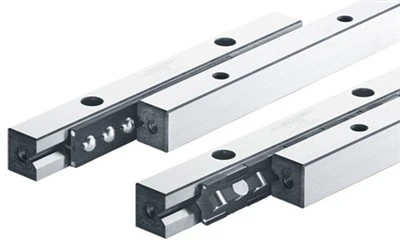
The Main Components of Linear Guide Rails

1. The Rail – The Foundation
The rail is the fixed, stationary component that provides a hardened and smooth track for the carriage to move along. It is typically made of hardened carbon steel (e.g., S55C) or stainless steel, with one or more raceway grooves on its surface.

2. The Carriage (Slider) – Where the Load Sits
The carriage is the moving part that supports the load and travels along the rail. It contains the rolling elements and their recirculation system. The material is usually hardened steel or aluminum alloy.

3. Rolling Elements – Balls / Rollers
Rolling elements are positioned between the rail and the carriage raceways to bear the load and roll smoothly. Most linear guide rails use balls (for smooth, fast movement) or rollers (for higher load capacity).
4. End Caps & Seals – Keeping Contaminants Out


5. Bearing Blocks – Stability Under Pressure
The bearing block holds all components together, ensuring the carriage remains aligned with the rail even under heavy loads. However, insufficient rigidity may cause bending, affecting the smoothness and precision of linear motion.
Design Considerations for Linear Guide Rails
1. Load Capacity
Not all linear guide rails are built the same. Small rails may suit 3D printers, while industrial machinery requires sturdier rails. Key considerations include:
• Static load (when the machine is stationary)
• Dynamic load (forces during motion)
• Moment load (torsional forces)
Overloading a rail can lead to rapid wear or even failure during operation. Therefore, we often recommend using larger carriages or multiple rails for heavy-load applications.

2. Precision Grade
Linear guide rails come in different precision grades, including:
Standard grade (general automation)
High precision (CNC machines, optical systems)
Ultra-high precision (semiconductor equipment, medical devices)
Generally, higher precision results in smoother motion and longer service life, but also at a higher cost.

3. Stiffness & Damping
If your equipment experiences vibration or accuracy loss during operation, insufficient stiffness is often the cause. Solutions include:
• Preload (applying internal tension to reduce backlash)
• Optimizing contact angle (to distribute force evenly)
• Using stronger materials (hardened steel instead of aluminum)
Conclusion
Linear guide rails mainly consist of rails, carriages, rolling elements, and sealing systems. They are more than just metal rails, they determine the stability of the entire system. When designing, we should consider factors such as load capacity, precision, and damping.
JSM - Leading Linear Rail Manufacturers and Suppliers
As a leading manufacturer of linear guide rails, JSM offers a wide selection of models. We meet various application needs-from 3D printers to heavy-duty industrial equipment. In addition to our standard catalog products, JSM also provides custom rail designs. If you're interested, contact us to learn how we can upgrade your transmission system.