Introduction
Linear guides are core components of industrial transmission systems, used to precisely move equipment or mechanical parts along a straight line. Stainless steel linear guides are highly sought after in environments such as food processing, medical equipment, marine, and automation due to their corrosion resistance, wear resistance, and high precision. This article will begin with the basics of stainless steel linear guides and highlight key considerations for purchasing them.

What are Stainless Steel Linear Guides?
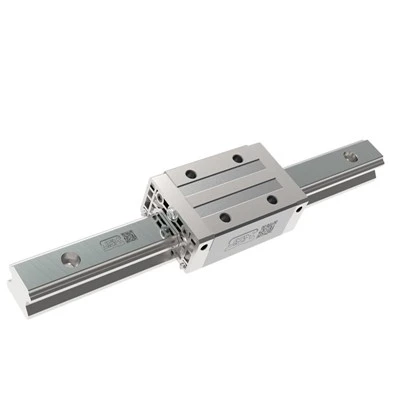
Stainless steel linear guides are precision components made of stainless steel, such as 316 and 304. They achieve high-precision linear reciprocating motion of mechanical parts through rolling elements. Their core functions include:
• Precise Guidance: Controlling the motion trajectory to ensure stable movement of components along a preset path;
• Load Bearing: Distributing loads through structural design to adapt to different weight requirements;
• Low-Resistance Transmission: Converting sliding friction into rolling friction, reducing running resistance and wear.
Stainless steel linear guides have the following characteristics:
• High Corrosion Resistance: Stainless steel resists moisture, salt spray, and chemical corrosion, making it suitable for humid or special industrial environments.
• Wear Resistance and Long Lifespan: Maintaining stable performance even under frequent movement or high load conditions, reducing replacement frequency.
• High Precision and Reliability: Precision machining ensures smooth slider movement and high repeatability, meeting the demands of demanding industrial applications.
• Easy Cleaning and Maintenance: Its smooth surface does not easily accumulate dust, facilitating cleaning and disinfection in high-hygiene environments such as food and pharmaceutical industries.
• Adaptable to various environments: They operate stably in humid, high-temperature, mildly chemically corrosive, or clean environments, with a wider application range than ordinary steel.
How to Select Stainless Steel Linear Guides

Identify Core Operating Requirements
Identify Core Operating Requirements
Load is the primary factor in selection. Overload not only accelerates guide wear but can also shorten service life by more than half. Therefore, the guide's load-bearing capacity must exceed the equipment's maximum operating load, taking into account both static and dynamic loads, and allowing for a safety margin.
• For light-load and high-speed applications, ball bearing guides are recommended for smooth movement and low resistance.
• For heavy-load and high-rigidity applications, roller bearing guides can be selected, increasing the contact area to enhance load-bearing capacity.
Environmental Adaptability
Depending on the environmental conditions, stainless steel linear guides may require additional protection to ensure long-term effective operation.
• Humid or corrosive environments: Such as food processing, marine equipment, or chemical production lines, where the air often contains salt spray, water vapor, or acidic or alkaline substances, 316 stainless steel guide rails with stronger corrosion resistance should be selected, supplemented with a protective coating to prevent corrosion.
• Cleanroom equipment: Semiconductor, pharmaceutical, and precision testing equipment have extremely high cleanliness requirements. Any trace of lubricant leakage or dust accumulation can affect product quality. A fully enclosed slider structure is used to prevent dust or lubricant leakage.
• High-temperature scenarios: Under high-temperature conditions, the lubricant in the guide rail may evaporate or deteriorate, and the thermal expansion of the metal can also cause changes in clearance, affecting motion accuracy. High-temperature resistant stainless steel and high-temperature grease should be selected.
• Dust or cutting environments: Install dust covers, sealing scrapers, and other devices to prevent foreign objects from entering the raceway and extend service life.
Precise Matching of Core Parameters
Precision Grade
The precision grade determines the repeatability and motion stability of the guide rail. However, higher precision is not always better; higher precision often leads to higher costs. Therefore, it is essential to select an appropriate precision grade based on the intended use of the equipment.
• Standard Grade: Suitable for general-purpose equipment with low positioning accuracy requirements.
• Medium-High Precision Grade: Commonly used for the routine precision needs of industrial equipment such as laser cutting machines and injection molding machines.
• High Precision Grade: Used in precision machining equipment such as CNC machining centers and testing equipment.
Material Selection
Even among stainless steel linear guide rails, different types of stainless steel will differ in properties such as corrosion resistance and stability.
• SUS440C Stainless Steel: Martensitic stainless steel, high hardness, excellent wear resistance, and resistance to general corrosion, suitable for industrial equipment requiring high-strength support;
• 304 Stainless Steel: Austenitic stainless steel, with strong basic corrosion resistance, non-magnetic, suitable for humid environments without strong acids or alkalis, but with lower hardness;
• 316 Stainless Steel: Contains molybdenum, with better resistance to salt spray and strong acids and alkalis than 304 stainless steel, suitable for highly corrosive environments such as marine engineering and pharmaceutical reactors.
Preload Grade
The preload grade indicates the tightness between the slider and the guide rail, providing the function of eliminating gaps, improving rigidity and positioning accuracy, and preventing the equipment from shaking or vibrating during movement.
• Light Preload: Smooth sliding, low friction, and light movement; however, lower rigidity, suitable for light-load, high-speed, or low-vibration equipment.
• Medium Preload: Achieves a balance between smoothness and rigidity, effectively suppressing vibration, suitable for most automated equipment, and is a general-purpose choice.
• Heavy Preload: Highest rigidity, strong vibration resistance, suitable for heavy-load equipment or equipment with drastic acceleration and deceleration.
Structural Compatibility for Selection
Size Compatibility
The guide rail length should cover the actual travel of the equipment and allow for buffer space; the cross-sectional dimensions must match both load capacity requirements and installation space constraints.
01
Slider Type
Choose slider types based on application scenarios. Standard sliders have strong anti-tipping capabilities and are suitable for heavy loads; short sliders are lightweight and compact, suitable for space-constrained scenarios; flange-type sliders offer flexible installation and are suitable for lateral or vertical structures.
02
Quantity Configuration
A single guide rail paired with two sliders can distribute the load and improve stability; for high-load scenarios, the number of sliders can be increased, or multiple guide rail combinations can be used.
03
Compatibility
Models that comply with universal standards (such as ISO and JIS) are preferred for easy replacement or upgrade.
04
Choosing a Reliable Supplier
A high-quality supplier is the guarantee of product reliability. Key considerations include:
• Qualifications and Quality Control: Possessing comprehensive quality system certifications and providing compliance certificates for materials and performance. JSM is ISO 14001, ISO 45001, and ISO 9001 certified, with a professional quality control team overseeing the entire process from raw materials to finished products.
• Technical Support: Providing selection advice, installation guidance, and customized services to meet different equipment needs. JSM offers tailored OEM/ ODM solutions, end-to-end technical support, and comprehensive training services.
• After-Sales Guarantee: Having stable supply capabilities and a comprehensive after-sales response mechanism to reduce equipment downtime risks. JSM provides global logistics support, a 1-year warranty, and 24-hour technical support to answer your questions anytime.
Conclusion
The selection of stainless steel linear guides should be tailored to the specific needs of the application, requiring a comprehensive evaluation of multiple factors, including load, environment, accuracy, and structure. Don't blindly pursue high-performance specifications; instead, achieve a balance between operational stability, lifespan, and cost through precise matching, providing reliable support for precision transmission in diverse scenarios. As a manufacturer specializing in linear motion solutions, JSM offers tailored stainless steel linear guide products and services to customers worldwide. Please contact us for inquiries.