


Introduction
In precision engineering, miniaturized equipment faces a key challenge - how to achieve accurate and stable linear motion in limited installation space. Miniature linear guides were developed to overcome these limitations. With their compact size, low friction, and high positioning accuracy, they have become essential motion components in semiconductor equipment, medical instruments, optical systems, and automation machinery. This article will comprehensively analyze what a miniature linear guide is, its characteristics, applications, selection, and maintenance, providing practical reference for precision applications.
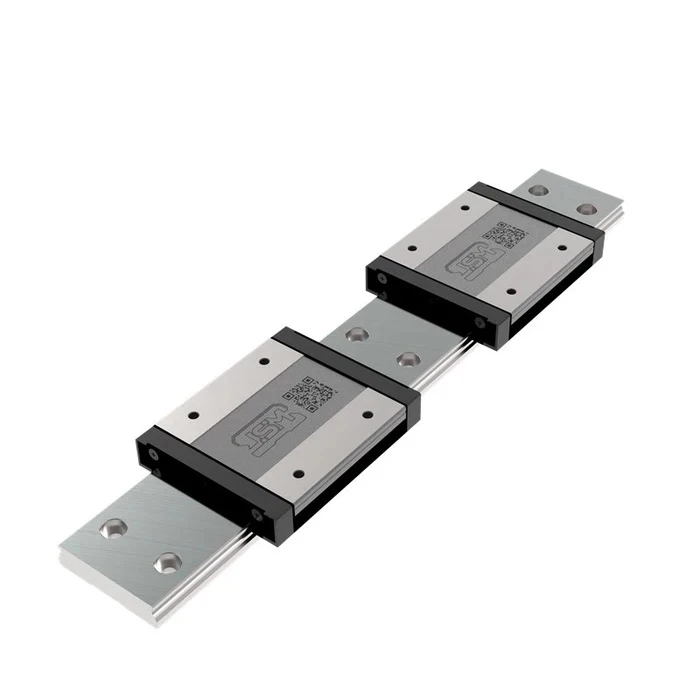
What is a Miniature Linear Guide?
A miniature linear guide is a miniaturized linear motion system consisting of a guide rail, carriage block, and rolling elements (balls or rollers). Its core function is to achieve precise, low-friction linear motion in small or high-precision equipment.
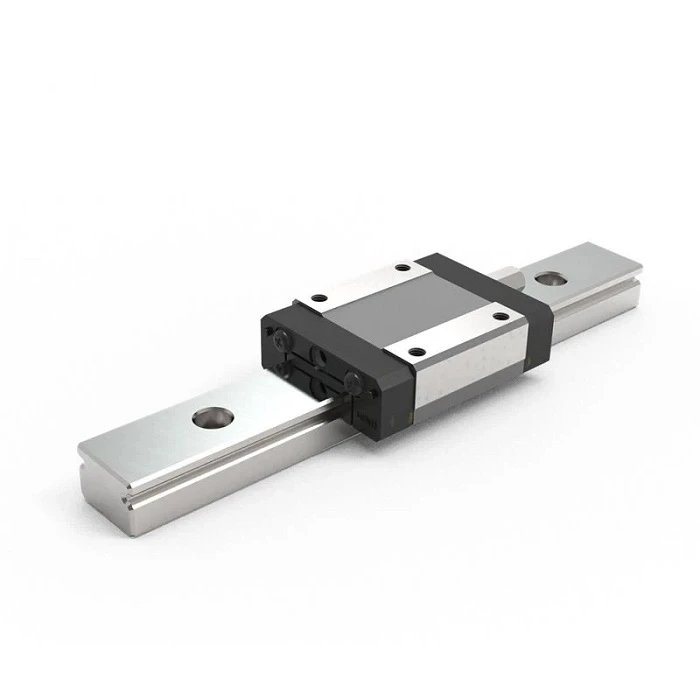
Key Structural Features
• Compact structure: Its small design allows for easy integration into miniature devices, optimizing space utilization.
• Rolling motion design: Uses rolling friction to minimize resistance, ensuring smooth and consistent movement.
• Lightweight design: Its overall weight is low, adding no extra burden to miniature devices.
Key Differences from Traditional Linear Guides
Size: Miniature guides are more compact and suitable for small devices with limited space, while traditional guides are larger and prioritize load-bearing capacity.
Precision: Miniature guides emphasize high-precision positioning, while traditional guides focus on adapting to different load requirements.
Applications: Miniature guides are designed for precise transmission in small, precision equipment, while traditional guides are widely used in linear motion scenarios in various general-purpose machinery.
Why Are Miniature Linear Guides Suitable for Precision Applications?
The core requirements of precision applications are stable high precision, while also meeting the needs for smooth motion, environmental adaptability, long-term reliability, and installation compatibility. How can miniature linear guides accurately match the motion requirements of precision equipment?
Compact and Lightweight
Miniature linear guides feature a compact design, small size, and light weight, allowing for flexible placement in limited installation spaces without occupying excessive internal space.
01
High-Precision Positioning
They possess stable, high-precision positioning capabilities with excellent repeatability, meeting the core requirements of precision equipment for motion accuracy.
02
Low Friction and Stability
The rolling friction structure ensures smooth, jam-free operation with low frictional resistance, low operating noise, and strong motion stability.
03
Environmental Adaptability
Miniature linear guides are adaptable to most common working environments, including clean and dry conditions. Some products can be adapted to special environments upon request, demonstrating strong compatibility.
04
Main Precision Application Fields
Miniature linear guides, with their compact structure, stable transmission performance, and high precision, can be flexibly applied in the following key precision fields:

Semiconductor Equipment
Semiconductor equipment has a dense internal structure, with limited installation space for core transmission components, while requiring extremely high positioning accuracy. Ordinary linear guides are too large and difficult to integrate, while miniature linear guides are compact in design and flexible in layout. They achieve high-precision, stable transmission through rolling friction, meeting the stringent precision requirements of semiconductor manufacturing processes.

Medical Equipment
Medical equipment has extremely high requirements for safety and precision. Miniature linear guides can be widely used in the moving parts of various medical devices, such as the movement of detection heads in diagnostic equipment and the precise driving of surgical instruments. They can be flexibly installed in compact equipment structures and ensure the accuracy and safety of medical operations through stable motion performance.

Optical Instruments
Optical instruments require precise component movement to achieve focusing, imaging, or detection functions. Overall, equipment is trending towards miniaturization. The size and frictional resistance of ordinary linear guides affect imaging accuracy and equipment portability. Miniature linear guides employ a lightweight, low-friction design to ensure smooth, interference-free movement, while high-precision positioning guarantees image quality. In addition, its compact structure perfectly aligns with the trend of instrument miniaturization.
How to Select the Right Miniature Linear Guide
Key Selection Factors
When selecting a miniature linear guide, it's essential to consider the equipment requirements and the conditions of the usage scenario.
• Load Requirements: Match the guide's dynamic and static load capacity to the application's mechanical demands.
• Installation Space: Ensure compatibility with available space and mounting structure.
• Accuracy Grade: Select higher accuracy levels for precision-critical instruments.
• Environmental Conditions: Choose corrosion-resistant materials and protective seals for humid or dusty environments.
Main Types and Features
Miniature linear guides are mainly classified into the following categories based on their structure and application:
• Standard Narrow Series: Compact structure, suitable for space-constrained light-load, high-precision applications, offering flexible installation.
• Wide Series: Enhanced anti-tipping capability and higher operational stability, suitable for applications requiring attitude control, capable of withstanding higher lateral loads, and improving equipment rigidity and precision stability.
• Lightweight Series: Lighter weight, focusing on reducing the overall load on the equipment, suitable for weight-sensitive small devices.
JSM's miniature linear guides offer both standard and wide configurations, allowing users to balance load capacity, rigidity, and installation flexibility according to specific project needs.
Installation, Maintenance, and Usage Recommendations
After selection, proper installation and maintenance are crucial to ensuring optimal performance and extended service life of the miniature linear guide. Here are detailed recommendations:
Installation Points
• Base Flatness: The guide rail must be installed on a highly flat, warp-free base to ensure smooth slider movement and positioning accuracy.
• Slider Alignment: The slider and guide rail should be strictly aligned during initial installation to avoid wear or movement resistance caused by misalignment.
• Bolt Torque Control: Tighten the fixing bolts evenly to the manufacturer's recommended torque to prevent uneven stress on the guide rail.
• Preload Adjustment: Adjust the slider preload appropriately (light, medium, heavy load) to ensure a balance between rigidity and smoothness, avoiding excessive clearance or overtightening.
01
Lubrication and Sealing
• Regular Lubrication: Add grease to the slider lubrication port periodically, depending on usage frequency and environmental conditions, to ensure smooth operation of the rolling elements.
• Sealing and Dust Prevention: Keep the slider seals intact to prevent dust, particles, or liquids from entering the rolling channels and reducing wear.
• Lubricant Selection: For high-temperature, low-temperature, or clean environments, select a suitable specialized grease.
02
Preload and Adjustment
• Proper Preload: Adjust the slider preload according to load and accuracy requirements. Insufficient preload will affect rigidity, while excessive preload may increase friction and wear.
• Regular Inspection: After a period of operation, check the preload status and make necessary adjustments.
03
Common Faults and Causes
• Slider Jamming or Uneven Movement: Often caused by insufficient lubrication, dust particles entering the slide, or an uneven base.
• Rail Wear: Excessive load or improper preload adjustment leads to uneven force on the rolling elements.
• Increased Positioning Error: Loose bolts, slider misalignment, or poor lubrication may affect repeatability and positioning accuracy.
04
Conclusion
Miniature linear guides provide a reliable, high-precision, and space-efficient motion solution for industries including semiconductors, medical devices, optical systems, and automation. Proper selection, installation, and maintenance help extend service life and maintain long-term equipment stability.
JSM, a professional linear guide manufacturer, offers a full range of miniature linear motion solutions tailored to precision applications. Contact us today to learn more about our high-performance miniature linear guides.


