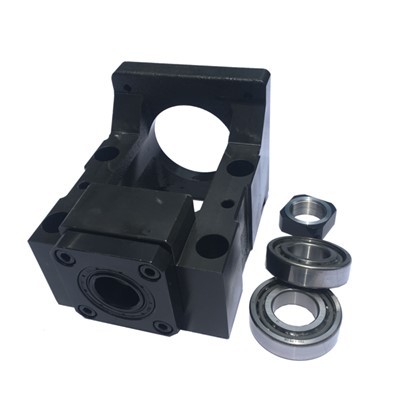
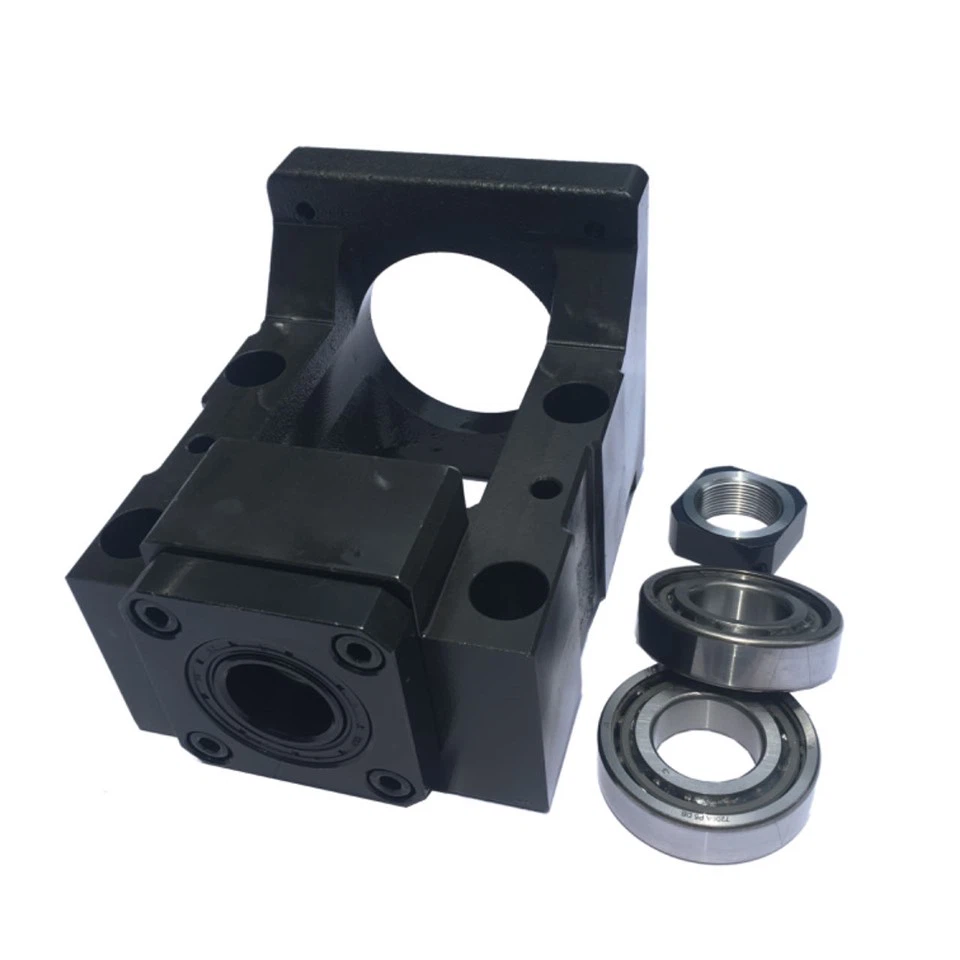
As a leading supplier of ball screw bearing blocks, I often encounter inquiries about the static load rating of these crucial components. Understanding the static load rating is essential for ensuring the proper selection and application of ball screw bearing blocks in various industrial settings. In this blog post, I will delve into the concept of static load rating, its significance, and how it relates to the performance of ball screw bearing blocks.
What is Static Load Rating?
The static load rating of a ball screw bearing block refers to the maximum load that the bearing can withstand without causing permanent deformation of the rolling elements or the raceways. This load is typically applied in a static or non - moving condition. When a load is applied to a bearing, the contact between the rolling elements (balls in the case of ball screw bearing blocks) and the raceways creates stress. If the load exceeds the static load rating, plastic deformation may occur, which can lead to a significant reduction in the bearing's performance and lifespan.

The static load rating is usually expressed in force units, such as Newtons (N) or pounds - force (lbf). It is determined through rigorous testing and analysis by bearing manufacturers. These tests involve applying a gradually increasing load to the bearing until a certain level of deformation is detected. The load at which this deformation occurs is then defined as the static load rating.
Significance of Static Load Rating
The static load rating plays a vital role in the selection of ball screw bearing blocks for different applications. Here are some key reasons why it is so important:
1. Preventing Permanent Deformation
As mentioned earlier, exceeding the static load rating can cause permanent deformation of the bearing components. This deformation can lead to increased friction, noise, and vibration during operation. It can also result in uneven wear of the rolling elements and raceways, which can ultimately lead to premature failure of the bearing. By selecting a bearing with an appropriate static load rating, we can ensure that the bearing remains in good condition and operates smoothly over its intended lifespan.
2. Ensuring System Stability
In many industrial applications, the stability of the mechanical system is of utmost importance. A ball screw bearing block with an insufficient static load rating may not be able to support the load properly, which can cause the system to become unstable. This instability can lead to inaccurate positioning, reduced precision, and even damage to other components in the system. By choosing a bearing with a suitable static load rating, we can enhance the stability and reliability of the entire system.
3. Meeting Application Requirements
Different applications have different load requirements. For example, in a heavy - duty industrial machine, the ball screw bearing block may need to support a large static load. On the other hand, in a light - duty application such as a laboratory instrument, the load requirements may be much lower. By understanding the static load rating, we can select the right bearing for each specific application, ensuring that it can meet the performance requirements.
Factors Affecting Static Load Rating
Several factors can affect the static load rating of a ball screw bearing block. Here are some of the main factors:
1. Bearing Size and Design
The size and design of the bearing have a significant impact on its static load rating. Generally, larger bearings have higher static load ratings because they have more contact area between the rolling elements and the raceways. Additionally, the design of the bearing, such as the number and size of the balls, can also affect its load - carrying capacity.
2. Material Properties
The materials used in the manufacture of the bearing also play a crucial role in determining its static load rating. High - quality materials with good mechanical properties, such as hardness and toughness, can withstand higher loads without deformation. For example, bearings made from high - grade steel alloys typically have higher static load ratings than those made from lower - quality materials.
3. Lubrication
Proper lubrication is essential for reducing friction and wear in ball screw bearing blocks. In addition, it can also have an impact on the static load rating. A well - lubricated bearing can distribute the load more evenly across the rolling elements and raceways, which can increase its load - carrying capacity. On the other hand, insufficient or improper lubrication can lead to increased friction and stress concentrations, which can reduce the static load rating.
How to Determine the Required Static Load Rating
Determining the required static load rating for a ball screw bearing block involves several steps. Here is a general approach:
1. Identify the Load Conditions
The first step is to identify the static loads that the bearing will be subjected to in the application. This includes both the radial and axial loads. Radial loads are those that act perpendicular to the axis of the bearing, while axial loads act parallel to the axis. In some cases, the bearing may be subjected to a combination of radial and axial loads.
2. Consider the Safety Factor
It is important to consider a safety factor when selecting a ball screw bearing block. The safety factor takes into account uncertainties in the load conditions, such as variations in the load magnitude, dynamic effects, and potential shock loads. A typical safety factor for static load applications ranges from 1.5 to 3, depending on the application requirements.
3. Select the Appropriate Bearing
Once the required static load rating has been determined, we can select a ball screw bearing block that meets or exceeds this rating. At our company, we offer a wide range of ball screw bearing blocks with different static load ratings to suit various applications. Our experienced sales team can assist you in choosing the right bearing based on your specific requirements.
Our Product Range
As a reliable supplier of ball screw bearing blocks, we are committed to providing high - quality products that meet the diverse needs of our customers. In addition to ball screw bearing blocks, we also offer a variety of related products, such as Servo Motor Bracket, Ball Screw Linear Bearing Seat, and Linear Pillow Block. These products are designed to work seamlessly with our ball screw bearing blocks, providing a complete solution for your linear motion applications.
Conclusion
The static load rating is a critical parameter when it comes to the selection and application of ball screw bearing blocks. By understanding the concept of static load rating, its significance, and the factors that affect it, we can make informed decisions when choosing the right bearing for our applications. At our company, we have the expertise and product range to meet your needs. Whether you are looking for a ball screw bearing block with a specific static load rating or need assistance in selecting the right components for your system, we are here to help. If you are interested in our products or have any questions about the static load rating of ball screw bearing blocks, please feel free to contact us for procurement and further discussion.
References
- Harris, T. A., & Kotzalas, M. N. (2007). Rolling Bearing Analysis. Wiley.
- SKF. (2019). Rolling Bearing Handbook. SKF Group.